

Medical Excellence
Forehead Reduction Surgery in Delhi
A large or prominent forehead is something many people notice about their face but rarely discuss openly. For some it has always been there. For others it becomes more visible as the hairline shifts with age. Either way, forehead reduction surgery offers a lasting solution that changes facial proportions in a way no hairstyle or filler treatment can replicate.
Dr. Monisha Kapoor, a plastic surgeon in Delhi with 25 years of surgical experience, performs forehead reduction surgery at her clinic in Saket, New Delhi. Every case is assessed individually. No standard packages, no rushed consultations.

What Is Forehead Reduction Surgery?
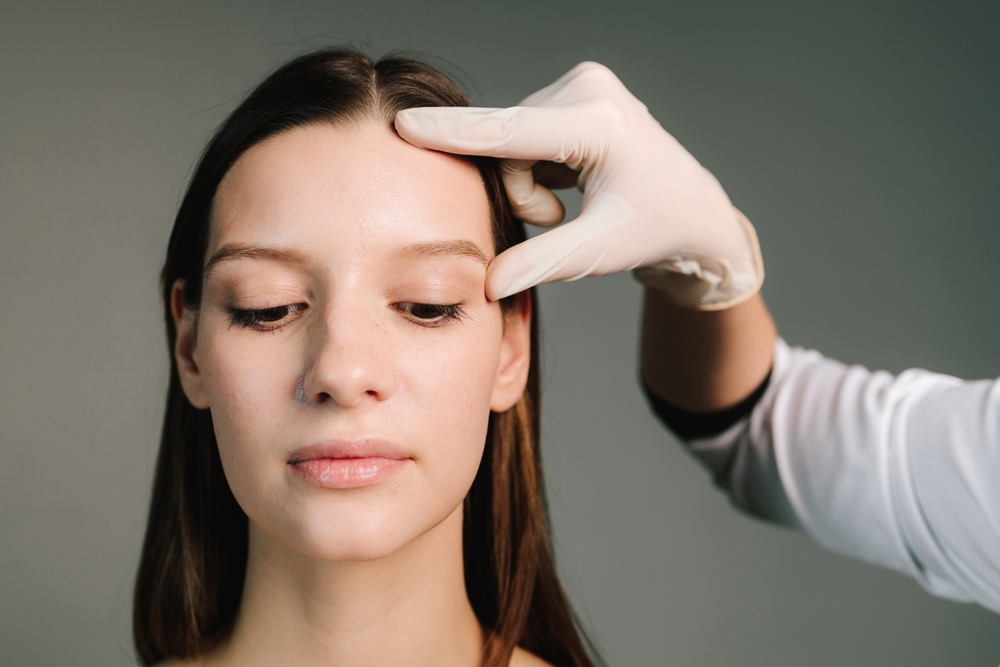
Forehead reduction surgery, also called hairline lowering surgery, is a procedure that reduces the height of the forehead by advancing the hairline forward. The goal is to create better facial balance and proportion between the forehead, mid-face, and lower face.
The procedure involves making an incision along the natural hairline, removing a section of forehead skin, and bringing the scalp down to close the gap. The result is a shorter, more proportionate forehead that looks completely natural because the incision is hidden within the hairline itself.
It’s worth understanding how this differs from a hair transplant. A hair transplant adds follicles to fill a receding hairline gradually over 12 months. Forehead reduction surgery physically moves the hairline forward in a single session. Results are immediate and permanent. For patients whose concern is the height of the forehead rather than hair density, surgery is the more direct and effective approach.
Am I a Good Candidate for Forehead Reduction?
Forehead reduction works best for a specific group of patients. The consultation at Dr. Monisha Kapoor’s clinic is where candidacy is properly assessed, but here is a general picture of who benefits most.

You are likely a good candidate if:
- Your forehead measures more than 6 to 7 centimetres from eyebrows to hairline
- Your hairline is high but relatively straight and not significantly receding
- Your scalp has reasonable flexibility and laxity to allow it to be moved forward
- You are in good general health with no conditions that affect healing or anaesthesia
- You want a permanent solution rather than a hairstyle-dependent fix
- You have tried different hairstyles and are not satisfied with how they manage the concern
You may not be the right candidate if:
- You have a significantly receding or thinning hairline, in which case a hair transplant may be more appropriate
- Your scalp has very low laxity, making it difficult to advance the hairline adequately
- You have unrealistic expectations about how much the forehead can be reduced in a single procedure
- You have a history of keloid scarring
Dr. Monisha Kapoor assesses scalp laxity, hairline shape, and facial proportions at the consultation before making any recommendation. Some patients benefit from a combination of forehead reduction and hair transplant for the best overall result.
Not sure if forehead reduction is right for you?
How Is Forehead Reduction Surgery Performed?
Understanding the procedure helps set realistic expectations. Here is how forehead reduction surgery is performed at Dr. Monisha Kapoor’s clinic in Delhi.

Consultation and Planning
Dr. Monisha evaluates the forehead height, hairline shape, scalp laxity, and overall facial proportions. The new hairline position is marked and agreed upon before the procedure date is set.
Anaesthesia
The procedure is performed under local anaesthesia with sedation or general anaesthesia depending on the patient’s preference and clinical assessment. Patients are comfortable throughout.

Incision
An incision is made along the natural hairline, carefully placed so the resulting scar sits within the hairline where it is naturally concealed by surrounding hair.

Scalp Advancement
The scalp is carefully released from the underlying tissue to create enough movement. The hairline is brought forward and secured in its new position.
Closure
The incision is closed with sutures. The technique used at this step directly affects how well the scar heals and how naturally the hairline looks once recovery is complete.

Post-Procedure Care
A dressing is applied before discharge. Detailed written aftercare instructions are provided. A follow-up appointment is scheduled within 7 to 10 days. Most procedures take between one and two hours depending on the degree of advancement needed.
Types of Forehead Reduction Techniques
Two main surgical approaches are used for forehead reduction at Dr. Monisha Kapoor’s clinic. The recommendation depends on the patient’s scalp laxity, hairline shape, and the degree of reduction needed.
Direct Hairline Lowering (Scalp Advancement)
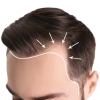
The most commonly used technique. The incision is made along the hairline, the scalp is mobilised and brought forward, and the excess forehead skin is removed. Suitable for patients with good scalp laxity who want a single-session result with immediate visible change.
Combined Approach (Reduction + Transplant)
For patients with limited scalp laxity or an irregular hairline, a two-stage approach works better. The first stage advances the scalp as far as laxity allows. A hair transplant is then performed 6 to 9 months later to refine the hairline, add density, and further reduce the apparent forehead height. This combination gives a more natural-looking result for complex cases.
Benefits of Forehead Reduction Surgery
-
Better facial proportions: the ideal ratio between forehead and the rest of the face is roughly equal thirds. A high forehead disrupts this balance. Forehead reduction restores it in a way that makes the overall face look more harmonious. -
Permanent result from one procedure: unlike injectables or hairstyle-dependent solutions, the result from forehead reduction surgery is permanent. The hairline stays where it is moved to. -
Natural-looking scar: the incision is placed along the hairline where it is hidden by surrounding hair. With proper healing and a skilled surgeon, the scar becomes very difficult to spot within a few months. -
Immediate visible change: patients see the new hairline position immediately after surgery. Unlike hair transplant results which take 12 months to fully develop, the change from forehead reduction is visible from the start. -
Improved confidence: patients who have been self-conscious about a high forehead for years consistently describe a meaningful shift in how they feel about their appearance after the procedure. -
Can be combined with other facial procedures: forehead reduction is frequently planned alongside a brow lift or rhinoplasty for patients who want to address facial proportions more comprehensively in a single surgical session.
Want to find out how much your forehead can be reduced?
Recovery and Aftercare Guidelines
Week 1
Some swelling, tightness, and bruising around the forehead and hairline are normal. Patients are advised to sleep with the head elevated, avoid bending forward, and keep the incision area dry. Most discomfort is well managed with prescribed pain relief.
Week 2
Swelling reduces significantly. Sutures are removed within 7 to 10 days. Most patients feel comfortable going out in public by the end of week two. Strenuous activity and direct sun exposure on the scar should still be avoided.
Month 1 to 3
The scar is visible but continues to fade and soften. Numbness or a tight sensation along the hairline is common during this period and resolves gradually as the nerves settle.
Month 3 to 6
The scar has faded considerably for most patients. The hairline looks and feels natural. Full results are assessed at the 6-month mark.
Dr. Monisha Kapoor’s team provides a detailed written aftercare guide at discharge. Follow-up appointments are scheduled at one week, one month, and three months after the procedure.

Why Choose Dr. Monisha Kapoor for Forehead Reduction in Delhi?
Dr. Monisha Kapoor has 25 years of plastic and cosmetic surgery experience in Delhi. She is a Gold Medalist in MCh Plastic Surgery, India’s first female member of the American Society of Aesthetic Plastic Surgeons (ASAPS), and has performed over 10,000 procedures at her clinic in Saket, South Delhi.
Forehead reduction requires precise incision planning, careful tissue handling, and a strong understanding of facial proportions. The scar sits along the hairline and how well it heals depends almost entirely on the surgeon’s technique and experience. This is not a procedure to delegate to a junior surgeon.
As a plastic surgeon in Delhi with full surgical training, Dr. Monisha Kapoor brings the anatomical depth and aesthetic judgment that this procedure demands. Every forehead reduction at the clinic is planned individually around the patient’s facial proportions, hairline shape, and scalp characteristics.
Patients also have access to the clinic’s full range of facial surgery procedures including facelift, rhinoplasty, brow lift, and skin treatments, all available under one roof.
25 years of plastic and cosmetic surgery experience in Delhi
10,000 plus procedures performed across all specialties
4.9 Google rating from verified patient reviews
All procedures performed personally by Dr. Monisha Kapoor
Full range of facial procedures available in one clinic
Clinic located in Saket, South Delhi
Financial Transparency
Forehead Reduction Surgery Cost in Delhi
Forehead reduction surgery cost in Delhi varies depending on the technique used, whether the procedure is combined with a hair transplant or other facial surgery, and the facility involved.
A personalised cost estimate is provided during consultation at Dr. Monisha Kapoor’s clinic in Saket. No generic pricing is quoted without first assessing the patient’s scalp laxity, hairline position, and the degree of reduction that is realistically achievable.
What Determines the Final Cost:
-
Technique used: direct advancement or combined approach with hair transplant
-
Combined procedures: whether the procedure is combined with a brow lift, rhinoplasty, or other facial surgery
-
Anaesthesia type: local with sedation or general anaesthesia
-
Surgical plan: number of sessions required
Frequently Asked Questions About Forehead Reduction
How much can the forehead be reduced in one procedure?
Most patients achieve a reduction of 1 to 3 centimetres in a single session, depending on scalp laxity. Patients with limited scalp flexibility may achieve less in the first session and benefit from a combined hair transplant approach for additional improvement over time.
Will the scar be visible after forehead reduction surgery?
The incision is placed along the natural hairline where it is mostly hidden by surrounding hair. With proper care and healing, scars fade significantly within 6 months. Dr. Monisha Kapoor uses closure techniques specifically designed to minimise scar visibility.
Is forehead reduction surgery permanent?
Yes. The hairline is surgically advanced and stays in its new position permanently. The result does not reverse over time, though natural ageing continues around the hairline.
What is the difference between forehead reduction and a hair transplant?
Forehead reduction physically moves the hairline forward in one session, with results visible immediately. A hair transplant adds follicles to fill gaps or extend the hairline, with full results developing over 12 months. For patients whose main concern is forehead height rather than hair density, forehead reduction gives a more immediate and definitive result.
Can forehead reduction be combined with other facial procedures?
Yes. It is frequently combined with a brow lift, rhinoplasty, or facelift surgery. Dr. Monisha Kapoor plans combination procedures as a single surgical session where it is clinically appropriate and safe to do so, which reduces overall recovery time.
How long does recovery take after forehead reduction?
Most patients are comfortable going out in public within two weeks. Full recovery with complete scar fading takes 3 to 6 months. Most patients return to desk work within one week of the procedure.
Is forehead reduction surgery painful?
The procedure is performed under anaesthesia and is not painful during surgery. Post-operative tightness, mild soreness, and scalp numbness are normal for the first few weeks. These resolve gradually as the tissues settle and nerves recover.
Is forehead reduction surgery safe for Indian skin?
Yes. Dr. Monisha Kapoor has 25 years of experience working with Indian and South Asian skin. Incision placement, closure technique, and aftercare are all adapted to account for how Indian skin heals and scars, reducing the risk of hyperpigmentation along the hairline.