 Book An Appointment

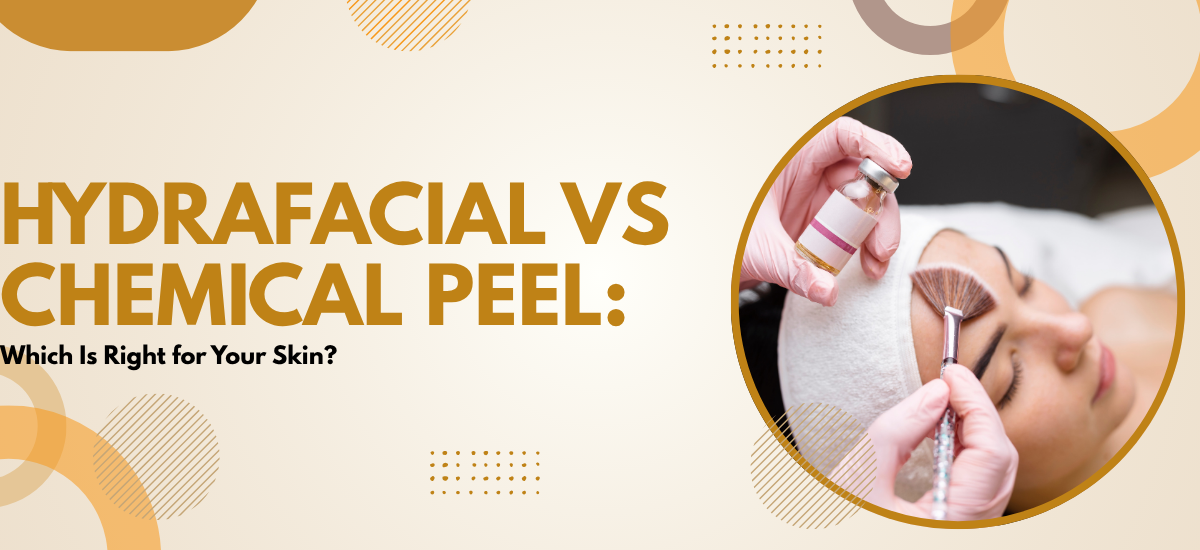
A HydraFacial cleanses, clears your pores, and floods the skin with moisture in a single pass, and you walk out with no recovery at all. A peel is the heavier option, using acid to strip away damaged layers so fresh skin comes through, which costs you a few days of downtime but hits tougher problems harder.Both promise brighter, smoother skin, but they get there by very different routes.
According to Dr. Monisha Kapoor, an experienced plastic surgeon in Delhi, “A HydraFacial is maintenance, a peel is correction, so the honest question isn’t which is better, it’s whether your skin needs a polish or an actual reset.”
| Factor | HydraFacial | Chemical Peel |
| Depth | Surface, gentle | Deeper resurfacing |
| Downtime | None | A few days |
| Best for | Glow, hydration | Pigmentation, scars |
| Intensity | Mild | Stronger |
Not sure whether your skin needs a polish or a deeper reset? Book Appointment
How Does Each One Work?
Depth is the whole story here, really.
- The HydraFacial runs a vortex tip across your skin, cleansing, lightly buffing, vacuuming the pores, then soaking everything in serum, and the whole thing feels more like a spa hour than a treatment
- A peel does something blunter. Acid goes on, the damaged top layers dissolve, and over the next days they flake off to uncover newer skin beneath
- How deep that acid reaches is a dial, light, medium, or deep, and the recovery climbs right alongside the strength you pick
- The facial stays deliberately mild, which is the entire reason it skips the redness and peeling that a real chemical peel puts you through
One polishes, the other resurfaces, plain and simple. A chemical peel earns its place when the problem sits deeper than any facial can reach, think pigmentation or old acne scars.
Which One Is Right for Your Skin?
Comes down to two things, what you’re fixing and how much downtime you can stomach.
- Glow before a wedding, or just keeping skin happy month to month? The HydraFacial wins on the spot, no recovery to plan around
- Stubborn pigmentation, sun damage, real acne scars? That’s peel territory, the kind of correction a facial can’t fake
- Touchy, easily-irritated skin usually takes the HydraFacial in its stride, whereas a peel wants more caution and the right strength dialed in
- And honestly, lots of people do both, a round of peels to fix things, then HydraFacials to hold the result
Pigmentation is one of the main reasons people turn to peels, so this skin pigmentation guide is worth a read before you choose.
Why Choose Dr. Monisha Kapoor for Skin Treatments?
Dr. Monisha Kapoor was the first Indian woman aesthetic plastic surgeon admitted to the American Society of Aesthetic Plastic Surgery, and she carries ISAPS membership alongside more than 15 years of cosmetic practice. She won’t upsell you a peel when a facial would do, and she’ll push for the peel when your skin genuinely needs it, with every setting tuned for Indian skin.
📞 Call Now: +91 83739 84777
FAQs
1)Is a HydraFacial or chemical peel better?
Neither is universally better, it depends on whether you need maintenance or deeper correction.
2)Which has more downtime?
A chemical peel has a few days of downtime, while a HydraFacial has none.
3)Which is better for pigmentation?
A chemical peel usually works better for pigmentation and sun damage.
4)Can I combine the two?
Yes, many people use peels to correct and HydraFacials to maintain results.
References
- American Academy of Dermatology — Chemical Peels Overview
- National Library of Medicine — Chemical Peels and Skin Resurfacing
