Book An Appointment 📞 Call Now
Dr. Monisha Kapoor
  • Home
  • About Us
  • Treatments
    • Hair
      • Hair Transplant
    • Body
      • Liposuction
      • Six Pack Abs
      • Hour Glass Shape
      • Brazilian Butt Lift
      • Thigh Gap
      • Full Body Lift
      • Vaginal Revitalisation
      • Hand & Feet Revitalisation
      • Tummy Tuck
      • Breast Surgery
      • Male Chest Reshaping
      • Male Chest Reduction
      • Mommy Makeover
      • Men Makeover
    • Skin
      • Zein Obegi's Skin Treatment
      • Chemical Peels
      • Hydra Facial
      • Silk Peel
      • Pelleve Skin Tightening
      • IPL Foto Facials
      • Tri Active Deka Peel
      • Tattoo Removal
      • Laser Skin Toning
      • Laser Hair Reduction
      • Full Body Polishing
      • Halo BBL
    • Face
      • Acne Scar Treatment
      • Face & Neck Lift
      • Forehead
      • Neurotoxin and Fillers
      • Brows
      • Eyes
      • Nose
      • Cheeks
      • Lips
      • Chin
      • Face Bone Alteration
      • Dimple Creation
      • Face Thinning
      • Permanent Makeup
  • Resources
    • Facilities & Infrastructure
    • Media
    • Photos
    • Blog
    • Case Studies
  • Contact Us
+91-8860851727

Blog

Recent Posts

  • Lip Lift vs Lip Filler: Which Lasts Longer?
  • What Is Breast Augmentation and How Is It Done?
  • Is a Hair Transplant Permanent? What to Expect?
  • Brazilian Butt Lift Recovery: Week-by-Week Guide
  • What Is Halo BBL and What Skin Issues It Treats?

Archives

  • August 2026
  • July 2026
  • June 2026
  • May 2026
  • December 2023
  • July 2023
  • April 2023
  • July 2020
  • June 2020
  • November 2019
  • August 2019
  • August 2018
  • April 2018
  • March 2018
  • January 2018
  • December 2017
  • October 2017
  • September 2017
  • July 2017
  • June 2017
  • April 2017
  • December 2016
  • November 2016
  • October 2016
  • September 2016
  • August 2016
  • July 2016

What Is Facial Bone Alteration and What Can It Reshape?

Posted on July 13, 2026June 8, 2026

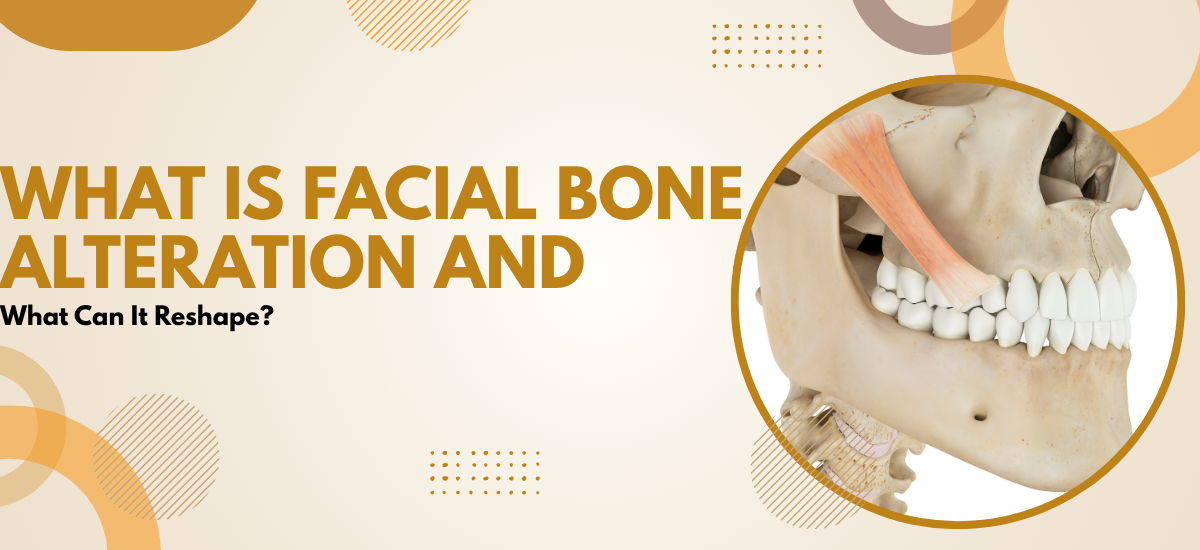
Facial bone alteration is a surgical category that physically reshapes the bone structure of the face to shift proportions, correct asymmetry, or change overall appearance. In this jaw gets narrowed, the cheekbones get built up or reduced, the chin gets repositioned, and changes are permanent once the bone heals. It suits patients whose concerns sit at the structural level and cannot be resolved with fillers or non-surgical options alone. 

According to Dr. Monisha Kapoor, a trusted plastic surgeon in Delhi, “Bone-level changes are where the real transformation happens. Soft tissue work refines, but when the shape of someone’s jaw or cheeks is the actual problem, the bone has to be addressed directly.”

Want to know if facial bone alteration is the right approach for your concerns? Book a Consultation

What Areas of the Face Can Bone Alteration Reshape?

Facial bone alteration covers several distinct zones, and most patients focus on one or two areas depending on what bothers them most about their facial structure.

Jaw and Mandibular Angle A wide or square lower face often comes from a prominent mandibular angle. Surgery trims the corner of the jawbone through incisions inside the mouth, shifting the face from a broader shape toward a smoother, more oval lower third with no visible external scars.

Cheekbone Augmentation and Reduction Flat cheeks get built up with implants placed through small internal incisions, while overly prominent cheekbones can be filed down to a more balanced level. Both directions of change are possible depending on what the overall face needs.

Chin Reshaping A weak or receding chin affects the entire profile, making the nose look larger and the jaw less defined. The bone can be moved forward through genioplasty or built up with a chin implant, and patients with an overprojecting chin can have the bone reduced instead.

Forehead and Brow Bone A heavy brow ridge can be contoured down surgically, and a flat or receded forehead can be built out with implants or bone cement. These procedures address the upper third of the face and make a real difference for the right patient.

For the full clinical detail on what the procedure involves, the facial bone alteration service page covers the techniques and treatment approach.

Who Is a Good Candidate for Facial Bone Alteration?

This is a significant surgical commitment, and patient selection matters as much as the technical execution.

Structurally Motivated Concerns The procedure works best for patients whose dissatisfaction clearly comes from bone structure rather than skin laxity, fat distribution, or ageing. Someone bothered by a square jaw, flat midface, or receding chin is describing something surgery can genuinely solve.

Stable Facial Development Candidates need to be past skeletal maturity, generally 21 and above. Operating on bone that is still developing produces unpredictable results, and younger patients are typically asked to wait.

Realistic Understanding of Results Bone reshaping changes proportions and structure. It does not make someone look like a different person, and patients who arrive with highly specific reference images of other people’s faces tend to need more consultation time before surgery is appropriate.

Good General Health Patients need to be medically fit, free from conditions that impair healing or increase bleeding risk, and willing to stop smoking well ahead of the procedure date.

Patients thinking about how bone alteration fits alongside other facial procedures can read through the face contouring blog, which covers how surgical and non-surgical approaches work together.

Why Choose Dr. Monisha Kapoor for Facial Bone Alteration?

Dr. Monisha Kapoor is India’s first woman aesthetic plastic surgeon admitted to the American Society of Aesthetic Plastic Surgery and holds active membership with ISAPS, with 25+ years of practice and over 10,000 procedures. She approaches every facial bone case with a whole-face assessment rather than operating on one zone in isolation, which is what keeps structural changes looking proportionate and natural across the full face.

📞 Call Now: +91 83739 84777

FAQs

Is facial bone alteration permanent?

Yes, once the bone heals the changes are permanent. Non-surgical refinements added alongside may need maintenance.

How long is recovery after jaw reshaping?

Significant swelling settles within three to four weeks. The final result becomes fully visible around three to six months post-surgery.

Are the surgical scars visible?

Most facial bone surgeries use incisions placed inside the mouth, so no external scars are left on the skin.

Can facial bone alteration be combined with other procedures?

Yes, many patients combine jaw reshaping with chin work or cheek augmentation in a single surgery for more comprehensive structural change.

References

  1. National Library of Medicine — Mandibular Angle Reduction Techniques: https://pubmed.ncbi.nlm.nih.gov/22234557/
  2. National Library of Medicine — Facial Skeletal Contouring Surgery Review: https://pubmed.ncbi.nlm.nih.gov/30633880/
Are Dermal Fillers Safe? Risks and Side Effects Explained

Posted on July 12, 2026June 8, 2026

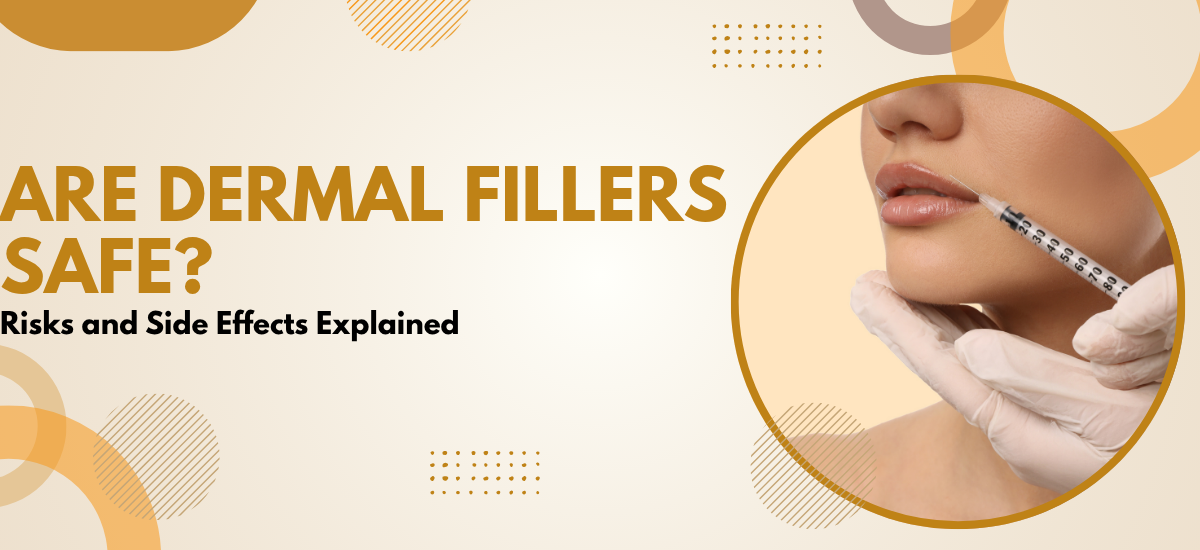
Dermal fillers are injectable treatments that restore lost volume, smooth deep folds, and enhance facial contours using substances like hyaluronic acid. They are widely used and largely safe when administered by a qualified practitioner in a clinical setting, but they are not without risk  and patients who understand what those risks actually are tend to make far better decisions before booking.

According to Dr. Monisha Kapoor, a trusted cosmetic surgeon in Delhi, “Fillers done right carry very low risk, but done wrong – wrong product, wrong plane, wrong injector the complications can be serious and some of them are not easy to reverse.”

Thinking about dermal fillers and want an honest assessment first? Book a Consultation

What Are the Common Side Effects of Dermal Fillers?

Most side effects from fillers are temporary and mild, they settle on their own within a few days to two weeks.

Redness, Swelling and Bruising These are the most common reactions and show up across a large number of patients regardless of filler type used. The body is responding to a needle and a foreign substance, so some level of visible reaction at the site is expected and normal. It clears without any intervention, usually within a week.

Lumps and Irregularities Uneven placement or slight migration after injection can leave small lumps under the skin. Many of these smooth out on their own as the product settles into place over a few days. For lumps that hang around, hyaluronidase dissolves HA-based fillers cleanly which is a big part of why hyaluronic acid remains the preferred choice for most facial areas.

Asymmetry The face often looks uneven once swelling drops, rather than immediately after the session. That’s normal. A correction visit with the same injector addresses it, and in most cases no additional product is needed.

Warning Signs Worth Acting On Swelling that hasn’t settled past two weeks, skin that’s getting warmer or harder, or redness that’s spreading rather than fading these are not things to wait out. They can point to infection or a delayed reaction, and a doctor needs to see it quickly.

For a full picture of what the treatment involves, the dermal fillers page covers the product types and treatment areas in detail.

What Are the Serious Risks Patients Should Know About?

Rare complications from fillers are uncommon but real, and knowing them helps patients ask the right questions before treatment.

Vascular Occlusion This is the one complication that can turn genuinely serious, fast. When filler is accidentally injected into or compresses a blood vessel, it cuts off blood flow to the surrounding tissue and can cause skin necrosis. In very rare cases involving vessels close to the eye, vision loss has been reported. It doesn’t happen often, but when it does, it almost always comes down to the injector’s anatomical knowledge, not the product. A board-certified plastic surgeon brings that risk down considerably.

Nodule Formation Months or even years after treatment, some patients develop small firm lumps beneath the skin. This is an immune response to the filler material and tends to be more of a problem with permanent or semi-permanent non-HA fillers than with standard hyaluronic acid products, which is another reason most experienced practitioners default to HA.

Infection and Biofilm Poor sterile technique or an underlying skin condition in the treatment zone can lead to infection. Biofilm  where bacteria essentially colonise the filler deposit is rare but notoriously stubborn to treat once it takes hold. Catching it early makes a real difference.

Why the Injector Matters More Than the Product Most serious filler complications trace back to who performed the treatment, not which filler was used. A full consultation, a proper medical history review, and a clinical setting with a qualified practitioner are what actually move the risk needle.

Patients comparing what fillers can do against what a surgical procedure offers can read through the facelift vs botox blog, which lays out where injectables are the right call and where surgery makes more sense.

Why Choose Dr. Monisha Kapoor for Derma Fillers?

Dr. Monisha Kapoor is India’s first woman aesthetic plastic surgeon admitted to the American Society of Aesthetic Plastic Surgery and holds active membership with ISAPS, with 25+ years of practice and over 10,000 procedures. Injectable treatments at her Saket clinic are carried out with full anatomical assessment beforehand, which is what keeps complication rates low and results looking natural rather than overdone.

📞 Call Now: +91 83739 84777

FAQs

Are dermal fillers FDA approved?

Yes, hyaluronic acid fillers like Juvederm are FDA approved and have been used clinically since the mid-1990s.

How long do dermal fillers last?

Most HA fillers last between 6 to 18 months depending on the product used and the area treated.

Can filler complications be reversed?

Hyaluronic acid fillers can be dissolved with hyaluronidase. Permanent fillers cannot be reversed, which is why they carry higher long-term risk.

Who should avoid dermal fillers?

Patients who are pregnant, breastfeeding, or have active skin infections, autoimmune conditions, or bleeding disorders should not get fillers.

References

  1. National Library of Medicine — Complications of Dermal Fillers: Review: https://pubmed.ncbi.nlm.nih.gov/25068637/
  2. National Library of Medicine — Vascular Complications of Facial Fillers: https://pubmed.ncbi.nlm.nih.gov/30188255/

What Is a Silk Peel (Dermalinfusion) and Who Should Get It?

Posted on July 11, 2026June 8, 2026

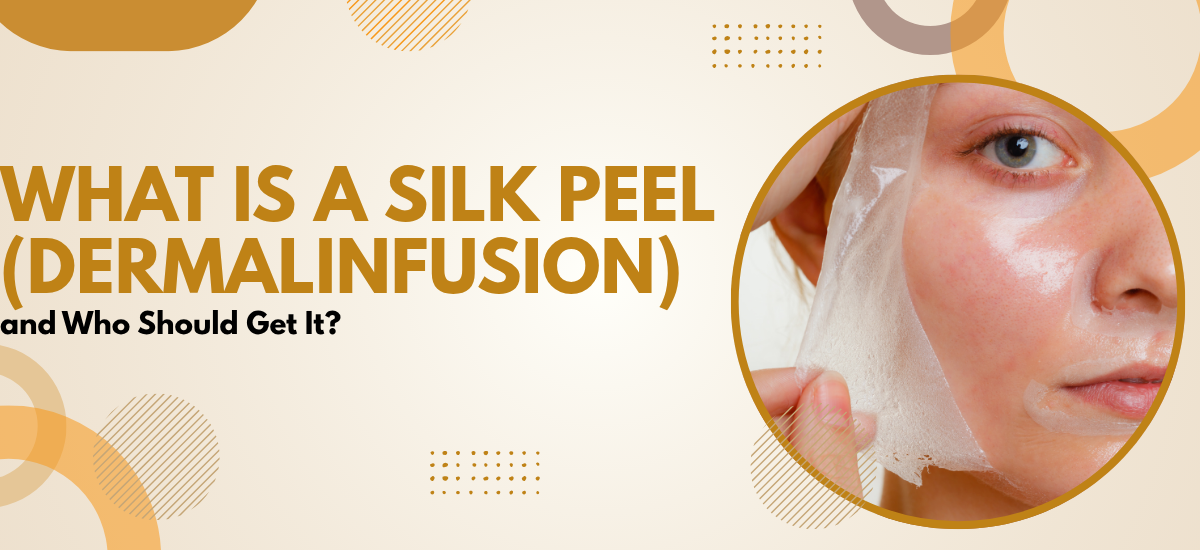
Silk Peel, also called Dermalinfusion, is a non-surgical skin treatment that exfoliates dead surface cells with a diamond-tipped wand while pushing condition-specific serums into the freshly cleared skin in the same pass. It addresses uneven tone, enlarged pores, acne marks, dullness, and early pigmentation with no recovery time needed.

According to Dr. Monisha Kapoor, a trusted plastic surgeon in Delhi, “Silk Peel clears congestion at the surface and drives active ingredients into skin that can now actually absorb them. That combination is what makes it work where a regular facial just doesn’t get there.”

Not sure if Silk Peel is right for your skin? Book a Consultation

How Does a Silk Peel Treatment Actually Work?

A session runs 30 to 45 minutes, needs no anesthesia, and the skin looks refreshed before the patient walks out.

The handpiece works in three actions at once. The diamond-tip moves across the skin at a controlled depth, scraping away the dull outer layer cleanly and evenly. As it clears the surface, the built-in infusion channel delivers a targeted serum directly into freshly exposed tissue — vitamin C for pigmentation, salicylic acid for acne-prone skin, or peptide formulations where early ageing is the concern. Absorption at this stage is far higher than applying the same serum over intact skin, which is the part most patients don’t expect. Alongside that, a vacuum mechanism lifts embedded sebum and blackhead material out of pores as the wand moves across the skin.

One session delivers a visible improvement in texture and tone. For pigmentation, scarring, or persistent pore congestion, four to six sessions spaced two to three weeks apart get the full correction across.

The full procedure detail is on the silk peel treatment page.

Who Should Get a Silk Peel and Who Should Wait?

Good candidates are easy to identify once the concern type and skin condition are clear — the treatment works well for a wide range of patients but needs to be matched correctly.

People with active cystic acne, open wounds, rosacea in a flare, or highly reactive skin are better off waiting until the skin has settled before starting. For everyone else, the results tend to be consistent and well-tolerated. Here is who benefits most from this treatment.

Dull or congested skin — Patients whose complexion looks flat or blocked despite a regular skincare routine get the most dramatic response, since the treatment works at both the surface and the pore level in one go.

Uneven tone and pigmentation — Sun damage, post-breakout marks, or early melasma respond well when a brightening serum is matched to the session. Results improve steadily with each visit.

Fine lines and early ageing — Adults noticing the first surface lines who are not ready for surgical or injectable options use Silk Peel as a steady maintenance treatment. It keeps skin cell turnover moving without any procedure risk.

Acne-prone skin (non-cystic) — Recurring whiteheads, blackheads, and surface congestion clear reliably when salicylic acid serum is used, without the dryness that comes from aggressive topical treatments.

Patients comparing non-surgical skin options with more structural facial work can read through the face contouring blog, which covers both approaches side by side.

Why Choose Dr. Monisha Kapoor for Silk Peel Treatment?

Dr. Monisha Kapoor is India’s first woman aesthetic plastic surgeon admitted to the American Society of Aesthetic Plastic Surgery and holds active membership with ISAPS, with 25+ years of practice and over 10,000 procedures. Skin treatments at her Saket clinic are matched to each patient’s concern and skin type rather than run as a fixed protocol, which is what separates clinical skin resurfacing from a standard salon facial.

📞 Call Now: +91 83739 84777


FAQs

1)Is Silk Peel painful?

No. Patients feel mild pressure and a light warmth during the session, nothing that causes discomfort.

2)How many sessions are needed?

Most skin concerns need four to six sessions spaced two to three weeks apart for lasting correction.

3)Is it safe for all skin types?

Yes. The treatment works safely across all skin tones, including darker Indian skin.

4)Is there downtime after a session?

None. Some patients see mild redness for a couple of hours. Normal activity resumes the same day.


References

  1. National Library of Medicine — Microdermabrasion and Skin Resurfacing Review: https://pubmed.ncbi.nlm.nih.gov/29178416/
  2. National Library of Medicine — Topical Serum Delivery and Skin Barrier Function: https://pubmed.ncbi.nlm.nih.gov/26172477/

What Is Laser Skin Toning and How Many Sessions Do You Need?

Posted on July 2, 2026May 27, 2026


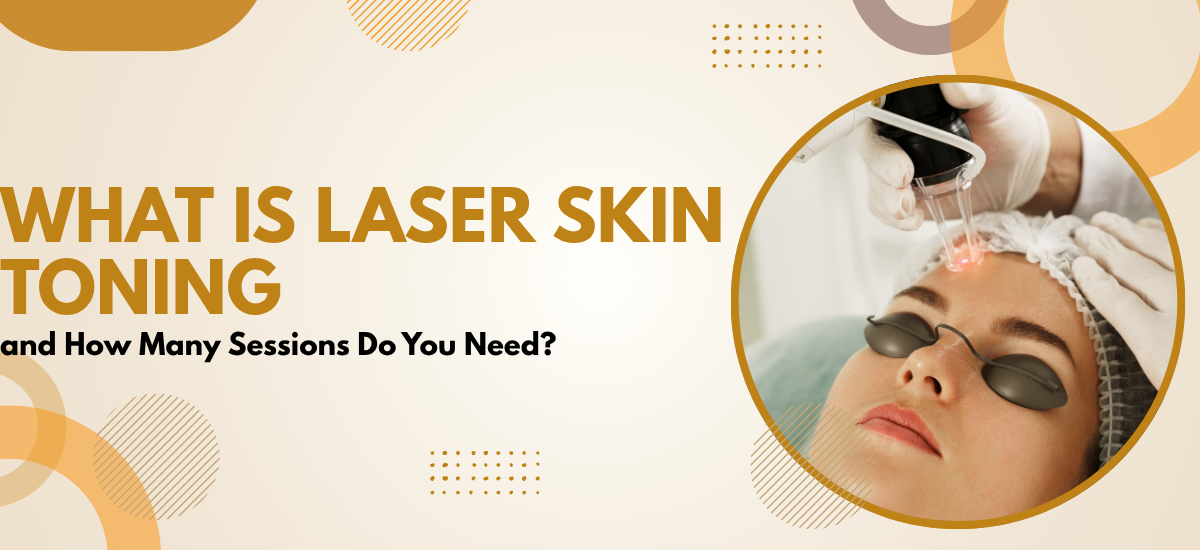
Laser skin toning is a non-invasive treatment that uses a Q-switched laser to break down excess pigment and even out the skin, with little downtime and no surgery. Results build over a course, usually four to six sessions, because pigment lifts gradually rather than in one go. It works well on dullness, tanning, melasma, and patchy, uneven tone.

According to Dr. Monisha Kapoor, an experienced plastic surgeon in Delhi, “Patients often expect one session to fix everything, but toning works in layers, gently lifting pigment over a course so the skin brightens evenly instead of patchily, which is far safer on Indian skin.”

Want clearer, more even skin tone without downtime? Book Appointment

How Does Laser Skin Toning Work?

It goes after the pigment sitting under your skin without disturbing the surface above it.

  • Quick, high-energy pulses from the Q-switched laser get soaked up by the excess pigment, which shatters into specks small enough for your body to flush away on its own
  • Since all of that happens below the surface, the outer skin is left alone, and that’s the reason you can walk straight back into your day afterward
  • There’s a bonus too. The laser nudges a little collagen along the way, so the skin often ends up smoother and a touch glower, not just clearer
  • Keeping the energy gentle and spreading it across visits is what makes the whole thing safe on darker Indian skin, the kind most likely to pigment in the first place

The result, then, shows up slowly rather than overnight. A course of laser skin toning is mapped to your skin tone, how deep the pigmentation runs, and how it behaves between sittings.

How Many Sessions Will You Actually Need?

It varies by skin, honestly, though a few patterns hold up for most people.

  • Four to six sessions cover most concerns, spaced a few weeks apart so the skin recovers and the pigment clears between each one
  • Melasma and other stubborn, deep pigmentation can need more, since it sits lower down and has a habit of creeping back without upkeep
  • Expect a gradual brightening across the course rather than one dramatic before-and-after moment
  • A maintenance session every few months tends to hold things steady, especially with sun exposure quietly working against you

Supporting the skin between sessions counts for as much as the laser does, so this skin care guide is worth a look on keeping skin healthy around treatment.

Why Choose Dr. Monisha Kapoor for Laser Skin Toning?

Dr. Monisha Kapoor was the first Indian woman aesthetic plastic surgeon admitted to the American Society of Aesthetic Plastic Surgery, and she carries ISAPS membership alongside more than 15 years of cosmetic practice. She sets the laser carefully to your skin tone and paces the sessions sensibly, so you get even, lasting brightening without the burns or rebound pigmentation that careless settings leave behind.

📞 Call Now: +91 83739 84777

FAQs

1)How many laser skin toning sessions are needed?

Most people need four to six sessions for visible, even results.

2)Is laser skin toning safe for Indian skin?

Yes, when the settings are carefully matched to your skin tone.

3)Does laser skin toning have downtime?

No, it works below the surface so there is little to no downtime.

4)Will the results last permanently?

Maintenance sessions help, as sun exposure and melasma can cause pigment to return.


References

  1. American Academy of Dermatology — Laser Treatments Overview
  2. National Library of Medicine — Q-Switched Laser for Pigmentation

Chemical Peel Cost in Delhi: Types and Pricing Explained

Posted on July 1, 2026May 27, 2026


Chemical peel cost in Delhi isn’t a single fixed figure, since it depends mainly on the type of peel, how deep it goes, and how many sessions your skin needs. A light surface peel sits at the affordable end, while a deeper peel for pigmentation or scarring costs more. Understanding the variables helps you judge a quote rather than simply chase the lowest one.

According to Dr. Monisha Kapoor, an experienced plastic surgeon in Delhi, “People shop on price alone and end up disappointed, because a peel that’s too strong in the wrong hands can scar or darken Indian skin, so what you’re really paying for is the judgment behind the treatment, not just the solution itself.”

Want a peel quote based on what your skin actually needs? Book Appointment

What Drives the Price?

A few things do most of the work in setting the final number.

  • The depth is the biggest factor, since a light surface peel costs far less than a medium or deep one that reaches stubborn pigmentation and scars
  • The specific peel solution matters too, because advanced or medical-grade formulas cost more than a basic glycolic refresh
  • Your number of sessions adds up, as most concerns need a course rather than a single sitting to actually shift
  • And the clinic behind it counts, since a peel done by a qualified doctor in a proper setup is priced above a salon treatment for good reason

So the price reflects the whole package, not just the bottle. A well-judged chemical peel is quoted around your skin type, your concern, and the depth that’s genuinely safe for you.

How Do You Judge Value Over Just Cost?

Cheapest rarely means safest when acid is going on your face.

  • Ask who actually performs it, because a doctor-supervised peel on Indian skin is worth far more than a discount salon special
  • Be cautious of rock-bottom prices, which often mean weak, watered-down solutions that do little, or strong ones used carelessly
  • Factor in the follow-up, since proper aftercare and sun protection are part of a good peel and a big part of the result
  • Remember a botched peel costs more to fix than a careful one cost in the first place, especially if it leaves pigmentation behind

Because skin prep and aftercare shape the outcome as much as the peel itself, this skin care guide is useful for supporting your skin around treatment.

Why Choose Dr. Monisha Kapoor for Chemical Peels?

Dr. Monisha Kapoor was the first Indian woman aesthetic plastic surgeon admitted to the American Society of Aesthetic Plastic Surgery, and she carries ISAPS membership alongside more than 15 years of cosmetic practice. She quotes honestly around what your skin needs rather than a teaser rate, choosing the right depth for your tone so you pay for a safe, effective result instead of a risky bargain.

📞 Call Now: +91 83739 84777

FAQs

1)What affects the cost of a chemical peel?

Mainly the peel’s depth, the solution used, and how many sessions you need.

2)Are deeper peels more expensive?

Yes, medium and deep peels cost more than light surface peels.

3)Why are some peels much cheaper?

Very low prices often mean weak solutions or treatment without proper supervision.

4)How many sessions will I need?

Most concerns need a course of peels rather than a single session.


References

  1. American Academy of Dermatology — Chemical Peels Overview
  2. National Library of Medicine — Chemical Peel Types and Uses

Posts pagination

Previous page Page 1 Page 2 Page 3

Month: July 2026

Recent Posts

  • Lip Lift vs Lip Filler: Which Lasts Longer?
  • What Is Breast Augmentation and How Is It Done?
  • Is a Hair Transplant Permanent? What to Expect?
  • Brazilian Butt Lift Recovery: Week-by-Week Guide
  • What Is Halo BBL and What Skin Issues It Treats?

Archives

  • August 2026
  • July 2026
  • June 2026
  • May 2026
  • December 2023
  • July 2023
  • April 2023
  • July 2020
  • June 2020
  • November 2019
  • August 2019
  • August 2018
  • April 2018
  • March 2018
  • January 2018
  • December 2017
  • October 2017
  • September 2017
  • July 2017
  • June 2017
  • April 2017
  • December 2016
  • November 2016
  • October 2016
  • September 2016
  • August 2016
  • July 2016
Footer – Dr. Monisha Kapoor
Plastic Surgeon · Delhi NCR
Dr. Monisha Kapoor

Dr. Monisha Kapoor

M.Ch. Plastic Surgery  ·  25+ Years of Practice  ·  10K+ Procedures

About

A practice built on precision. Board-certified plastic surgeon affiliated with the International Society of Aesthetic Plastic Surgery and the American Society of Aesthetic Plastic Surgery. Every consultation begins with listening — and every outcome is designed around your anatomy, your goals, and your vision of yourself.

Navigation

  • Dr's Desk
  • Facilities & Infrastructure
  • Blog
  • News & Updates
  • Career
  • Contact
  • Privacy Policy

Contact

18, Block J, Saket
New Delhi – 110017
011-40666307 / 08
+91 83739 84777
+91 8860851727
plasticsurgeonmonisha@gmail.com
Follow Connect

Disclaimer: The information on this website is provided for informational purposes only and is not meant to substitute the advice of your doctor or other healthcare professional. You should not use this information for diagnosing or treating a health problem or disease, or prescribing any medication. All images used are for illustrative purposes only; actual results and process may vary.

© 2026 plasticsurgeonmonisha.com All Rights Reserved

    Doctor

    Dr. Monisha Kapoor

    Delhi's Top Plastic Surgeon


    25+ Years Experience

    10,000+ Happy Customers
    Hair, Skin, Body, Face

    Book An Appointment

    WhatsApp
    HiHello 👋, welcome to Dr. Monisha Kapoor Aesthetics
    Can we help you?
    Open Chat
    Powered by Joinchat