 Book An Appointment

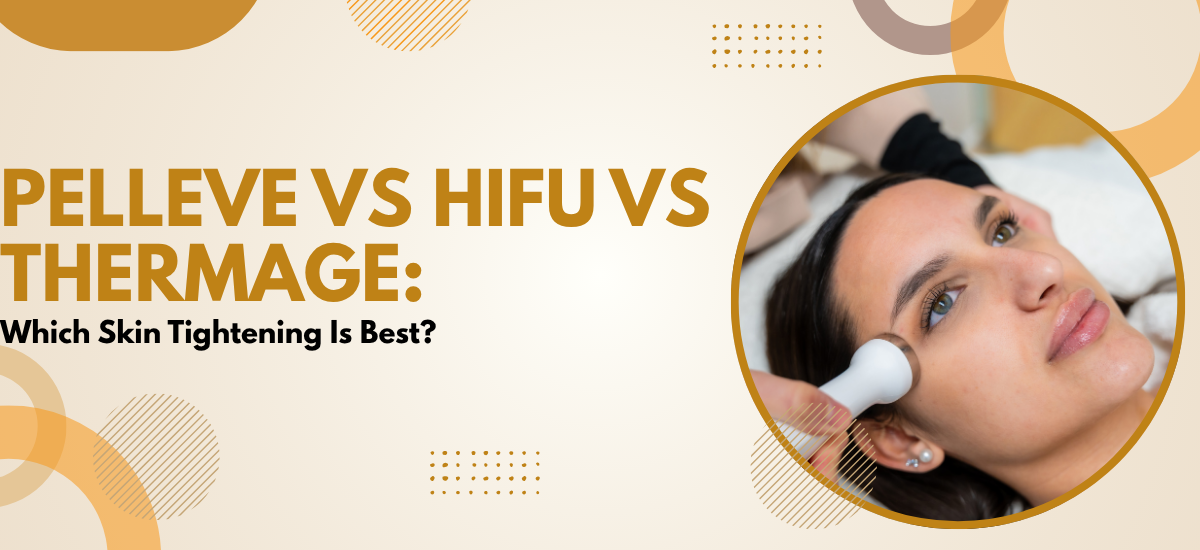
Pelleve, HIFU, and Thermage are three non-surgical skin tightening technologies that patients constantly encounter together when researching options. They stimulate collagen through different energy mechanisms, reach different depths in the skin, and suit different levels of laxity. None is universally the best choice because the right one depends entirely on what needs tightening and how much discomfort the patient is willing to sit through.
According to Dr. Monisha Kapoor, a trusted cosmetic surgeon in Delhi, “Patients ask which of these is best as if there is a single answer. There isn’t. Each technology has a different depth of action and a different comfort profile. The right choice depends on the patient’s laxity, their tolerance, and what outcome they are actually trying to achieve.”
| Pelleve | HIFU | Thermage | |
| Energy type | Radiofrequency | Ultrasound | Radiofrequency |
| Depth of action | Dermis | SMAS layer | Dermis |
| Comfort level | Very comfortable | Moderate to uncomfortable | Moderate |
| Downtime | None | None | None |
Want to know which skin tightening treatment suits your concern? Book a Consultation
How Do Pelleve, HIFU, and Thermage Each Work?
All three stimulate collagen but the mechanism, depth, and experience differ enough that they are not interchangeable.
Pelleve Continuous radiofrequency heats the dermis gradually until the tissue hits the temperature needed to trigger collagen remodelling. The sensation is a steady warmth rather than sharp pulses, which is why it rates as the most comfortable of the three. Results build across two to three sessions for mild to moderate facial and neck laxity.
HIFU Focused ultrasound targets the SMAS layer, the same connective tissue a facelift addresses surgically. That deeper reach gives it a stronger tightening effect on moderate laxity than radiofrequency devices can match. The tradeoff is comfort — sessions involve sharp, intermittent heat points fired into deep tissue that some patients find significant enough to need pain relief beforehand.
Thermage Radiofrequency delivered in a single comprehensive session rather than a course, reaching both the dermis and the subcutaneous fat layer. It suits patients who want results from one visit rather than committing to repeated appointments. The session can be uncomfortable in sensitive areas, and the single-treatment approach rewards patients who can sit through it rather than those who prefer gradual progress.
Full detail on Pelleve and how it compares to other tightening options is on the pelleve skin tightening service page.
Which One Should You Choose?
Four practical factors drive the decision more reliably than trying to find a single winner across all patients and concerns.
Laxity Level Mild laxity responds well to Pelleve across a short course. Moderate laxity that has already descended noticeably tends to do better with HIFU because of its deeper reach into the tissue. Thermage sits between them and works for both depending on the area.
Comfort Tolerance Patients sensitive to pain are far better suited to Pelleve than HIFU. The HIFU experience during a session is considerably more intense than either radiofrequency option, and patients finding this out mid-treatment rather than beforehand is a common and avoidable problem.
Treatment Preference Thermage runs as a single annual session. Pelleve builds across two to three spaced visits. HIFU is typically done once or twice yearly. Lifestyle and how a patient manages their schedule shapes which of these actually fits their life.
When Surgery Is Actually the Answer Prominent jowling, significant facial descent, and deep neck banding sit beyond what all three technologies can adequately correct. A facelift is the right treatment at that stage, and continuing to invest in non-surgical sessions on laxity that needs surgery only delays the outcome.
Patients thinking about where the boundary between non-surgical and surgical approaches sits can read through the facelift recovery blog, which covers what surgery involves and how recovery unfolds.
Why Choose Dr. Monisha Kapoor for Skin Tightening Surgery?
Dr. Monisha Kapoor is India’s first woman aesthetic plastic surgeon admitted to the American Society of Aesthetic Plastic Surgery and holds active membership with ISAPS, with 25+ years of practice and over 10,000 procedures. Skin tightening consultations at her Saket clinic include an honest assessment of which technology actually suits the patient’s laxity and tolerance rather than recommending whichever device happens to be available.
📞 Call Now: +91 83739 84777
FAQs
How many sessions does Pelleve take to see results?
Two to three sessions spaced four to six weeks apart, with results building for several months after the final visit.
Is HIFU better than Thermage for facial tightening?
HIFU reaches deeper tissue and suits moderate laxity better. Thermage covers a broader area and is more comfortable. Neither is universally better.
Can these treatments replace a facelift?
No. All three work well for mild to moderate laxity. Significant facial descent needs surgical correction that no non-surgical device can replicate.
Which of the three is least painful?
Pelleve is the most comfortable. Thermage is moderate. HIFU is the most intense, particularly over bony areas of the face.
References
- National Library of Medicine — Radiofrequency and HIFU for Non-Surgical Skin Tightening:chttps://pubmed.ncbi.nlm.nih.gov/24918873/
- National Library of Medicine — Comparative Review of Non-Invasive Skin Tightening Technologies: https://pubmed.ncbi.nlm.nih.gov/30188255/
