
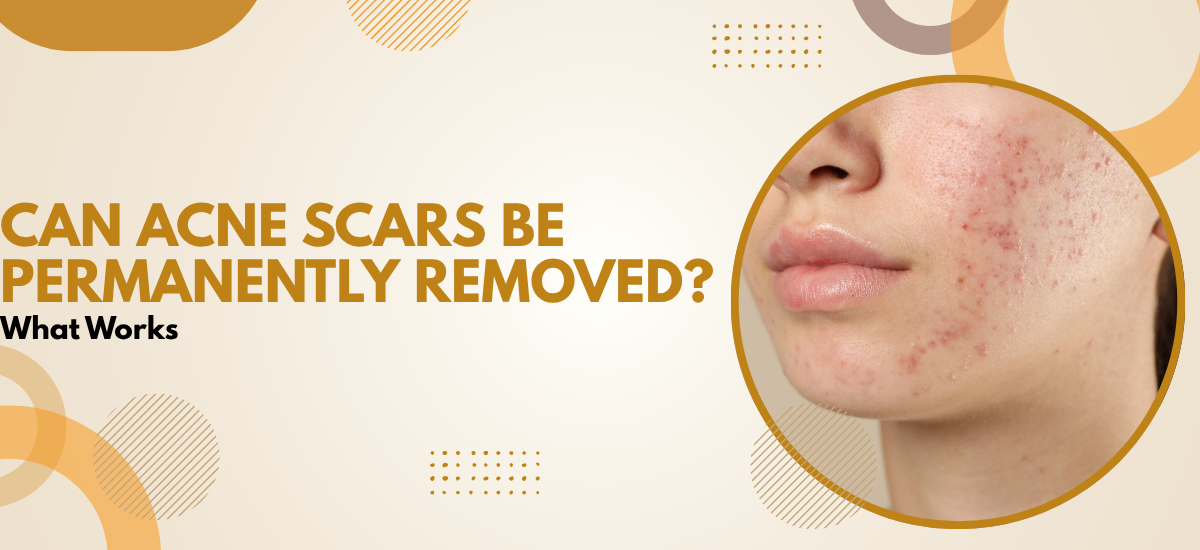
Acne scars can be dramatically improved and, in many cases, made nearly invisible, though “permanently removed” is a stretch for most scar types. The right treatment depends on whether the scars are pitted, raised, or just discoloured. With the correct approach, lasting improvement of seventy to ninety percent is realistic for a lot of people.
According to Dr. Monisha Kapoor, an experienced plastic surgeon in Delhi, “I’m honest with patients that we’re aiming for major improvement, not a magic erase, because chasing one hundred percent perfection often does more harm than just getting the scars to where they barely catch your eye anymore.”
Struggling with acne scars that won’t fade on their own? Book Appointment
What Treatments Actually Work?
The right tool depends entirely on the kind of scar you’re dealing with.
- Laser resurfacing is the workhorse for most pitted scarring, prompting the skin to rebuild collagen and smooth the surface over a few sessions
- Subcision works on tethered, rolling scars, where a fine needle releases the fibrous bands tugging the skin down from underneath
- For deep, narrow ice-pick scars, a technique called TCA cross drops a tiny amount of acid into each one to lift the floor of the scar
- Microneedling and peels handle the milder end, the shallow marks and uneven texture, and often pair well with the heavier treatments
So no single treatment fits every scar. A proper acne scar treatment plan usually combines methods, matched to your scar types and your skin tone.
What Results Can You Realistically Expect?
Honesty about outcomes saves a lot of disappointment later.
- Most people see major improvement rather than total erasure, with scars softening enough that they stop being the first thing you notice
- It takes time and patience, since collagen rebuilds slowly and the best results often show months after the final session
- Combining treatments almost always beats relying on one, because different scars in the same face respond to different methods
- And on darker Indian skin, careful settings matter enormously, since aggressive treatment can swap a scar for a pigmentation problem
Because skin type shapes everything here, this acne scar guide is worth reading on how stubborn scarring actually responds to treatment.
Why Choose Dr. Monisha Kapoor for Acne Scar Treatment?
Dr. Monisha Kapoor was the first Indian woman aesthetic plastic surgeon admitted to the American Society of Aesthetic Plastic Surgery, and she carries ISAPS membership alongside more than 15 years of cosmetic practice. She combines treatments and tailors every setting to Indian skin, so you get the most lasting improvement possible without trading scars for pigmentation.
📞 Call Now: +91 83739 84777
FAQs
1)Can acne scars be removed completely?
Most scars can be dramatically improved, though complete removal is rarely realistic.
2)What is the best treatment for acne scars?
It depends on scar type, with lasers, subcision, and peels each suiting different scar.
3)How many sessions will I need?
Several sessions are usually needed, depending on scar depth and type.
4)Are acne scar treatments safe for dark skin?
Yes, when settings are carefully matched to your skin tone to avoid pigmentation.
References
- American Society of Plastic Surgeons — Acne Scar Treatment
- National Library of Medicine — Acne Scar Management