 Book An Appointment

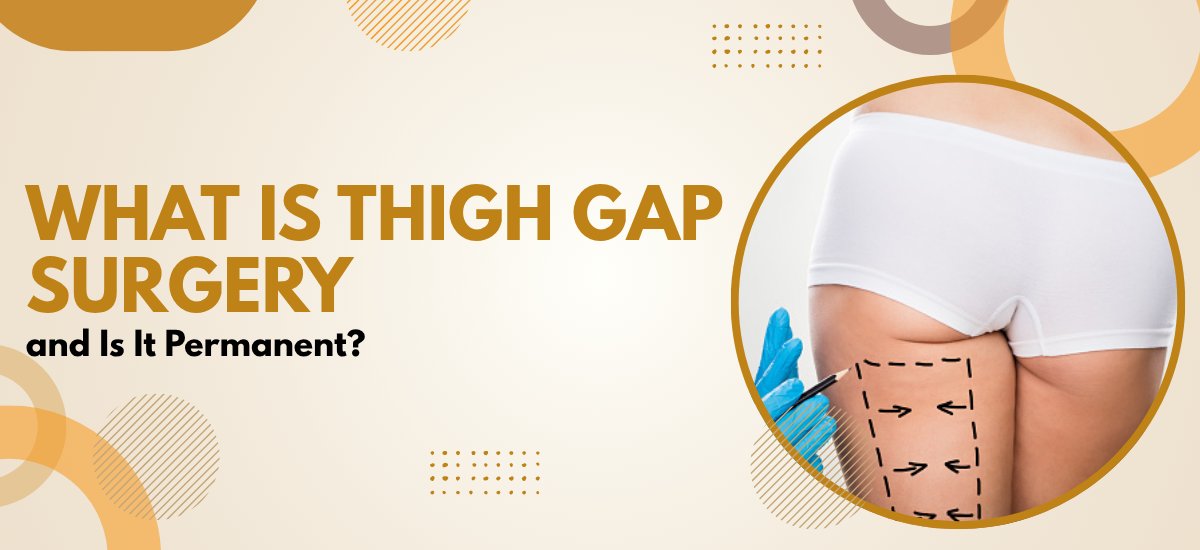
Thigh gap surgery is a specialised cosmetic procedure that creates visible space between the upper inner thighs through targeted liposuction and tissue contouring. The procedure removes stubborn fat from the inner thigh region. It reshapes the existing thigh contour. Results stay permanent for fat that gets removed since fat cells don’t grow back once eliminated, though significant weight gain can affect overall thigh appearance even when the original surgery worked perfectly. Patients with naturally wider hip bones or proportional thigh muscle development get better results than patients fighting against their underlying skeletal structure to create space that anatomy doesn’t naturally support.
According to Dr. Monisha Kapoor, an experienced plastic surgeon in Delhi, “Thigh gap surgery isn’t about creating space where anatomy doesn’t allow it, the procedure works for patients whose hip bone structure and thigh proportions naturally support a gap that’s currently hidden by stubborn inner thigh fat, patients fighting against their actual skeletal anatomy won’t get the result they want regardless of how skilled the surgeon is.”
Considering thigh gap surgery and want to understand whether it’s right for you and how long results last? Book Appointment
How Does Thigh Gap Surgery Actually Work?
The procedure isn’t basic liposuction. It targets specific zones along the inner thigh while preserving certain areas to maintain natural proportions. The technique requires careful planning of fat removal patterns. Removing too much creates an unnatural look. Removing too little leaves the gap still hidden. The balance between both decides how natural the final result actually looks during normal standing positions.
- Targeted Inner Thigh Liposuction: The surgeon focuses on the upper inner thigh zone where fat creates the visual barrier preventing thigh gap visibility. VASER ultrasound technology suits this work better than older liposuction methods because the precision needed for inner thigh sculpting is genuinely demanding. The probe enters through small incisions placed in the groin crease or upper inner thigh. Fat gets liquefied selectively then extracted carefully without affecting surrounding nerves or blood vessels
- Contour Sculpting Approach: The surgery isn’t just fat removal. The surgeon shapes the inner thigh contour to create a smooth transition between the gap area and the rest of the thigh. Some zones get more aggressive removal. Other zones get conservative treatment. Specific areas get fat preserved entirely to maintain natural proportions. This sculpting work separates good thigh gap surgery from bad thigh gap surgery far more than just how much fat gets removed during the procedure overall
- Skin Tightening Considerations: Patients with poor inner thigh skin elasticity may need additional skin tightening procedures alongside liposuction. Loose skin doesn’t retract properly after fat removal. The result becomes hanging skin rather than the cleaner gap patients want. Younger patients with good elasticity recover with naturally smooth contours. Older patients or those with significant prior weight loss often need body contouring procedures combined with liposuction for complete results
- Post-Surgery Settling: Initial swelling hides the new contour for the first 4 to 6 weeks completely. Compression garments stay on continuously throughout this period. The actual thigh gap gradually emerges as swelling resolves over months. Final contour becomes fully visible at 3 to 6 months post-surgery. The wait between initial surgery and seeing the final result tests patient patience but the gradual emergence is part of how all body contouring procedures actually work
Thigh gap surgery delivers permanent fat removal in treated zones when matched to the right candidate, and patients exploring liposuction options for inner thigh contouring find that surgeon expertise in proportional sculpting matters far more than simple fat removal volume because over-aggressive surgery creates obvious surgical-looking results that no amount of recovery time can correct.
Are Thigh Gap Surgery Results Actually Permanent?
The permanence question has a complicated answer. Fat cells removed during surgery don’t grow back. The body simply doesn’t regenerate adipose cells in adulthood. However, remaining fat cells can grow with weight gain. The original surgery permanence depends entirely on lifestyle factors after recovery completes rather than the surgical technique itself.
- Fat Cell Reality: Adults have a fixed number of fat cells from late adolescence onwards. Liposuction permanently removes a portion of these cells from treated zones. The removed cells cannot regenerate. The surgical zone has fewer fat cells permanently. This is why liposuction results stay permanent in technical terms regardless of what happens with overall body weight afterwards in different body areas
- Weight Gain Effects: Significant weight gain after surgery affects the result even though the original removed fat doesn’t return. Remaining fat cells in the treated zone can still grow larger with weight gain. Untreated zones tend to absorb more weight gain since they have more fat cells available. The body distribution shifts in unpredictable ways which is why surgeons emphasize stable weight maintenance for preserving the original surgical result
- Skin Elasticity Over Time: Skin elasticity continues changing with age regardless of surgical results. Inner thigh skin can become loose over decades even when the underlying fat distribution stays stable. Older patients eventually see some thigh gap diminishment from skin changes alone. Patients exploring body areas treated with liposuction often find that combining different procedures over time helps maintain the original result as natural ageing affects different body areas
- Lifestyle Maintenance: Maintaining the surgical result requires staying within 5 to 10% of post-surgery weight long-term. Regular exercise keeps the surrounding tissue toned and supports the surgical contour. Diet quality affects how the body holds the result over years. Patients who treat thigh gap surgery as the start of better body care rather than the end of effort tend to maintain results better than those expecting surgery alone to deliver permanent outcome regardless of subsequent lifestyle
Thigh gap surgery results stay permanent for the fat that’s actually removed during the procedure, and a deeper read on liposuction body areas helps patients see how different body zones respond differently to liposuction over the years which affects long-term planning around anybody contouring decisions they make going forward.
Why Choose Dr. Monisha Kapoor for Thigh Gap Surgery?
Dr. Monisha Kapoor is the first Indian woman aesthetic plastic surgeon admitted to the American Society of Aesthetic Plastic Surgery and a member of ISAPS, with over 15 years of dedicated cosmetic surgery practice behind her. She handles thigh gap surgery with detailed pre-op anatomical assessment of hip bone structure, thigh proportions, and skin elasticity, performs careful proportional sculpting using VASER technology, and walks every patient through whether their anatomy actually supports thigh gap creation rather than promising results that don’t match each patient’s individual skeletal reality.
📞 Call Now: +91 83739 84777
FAQs
Does thigh gap surgery work for everyone?
No, results depend on hip bone structure and thigh proportions naturally supporting a gap.
How long do thigh gap surgery results last?
Removed fat permanent, results last for life with stable weight maintenance afterwards.
Is thigh gap surgery painful?
Mild discomfort first week, well-managed with prescribed medication and compression garments.
When can I exercise after thigh gap surgery?
Light walking after 2 weeks, full workouts allowed after 6 to 8 weeks.
References
- American Society of Plastic Surgeons — Inner Thigh Liposuction
- National Library of Medicine — Thigh Liposuction Outcomes
